Stop the Fire.
Give your class a quick-thinking challenge. With one letter and a handful of categories, teams race to find their answers before the fire catches up.
Put the categories on a shared screen and let students write their answers on paper or mini whiteboards.
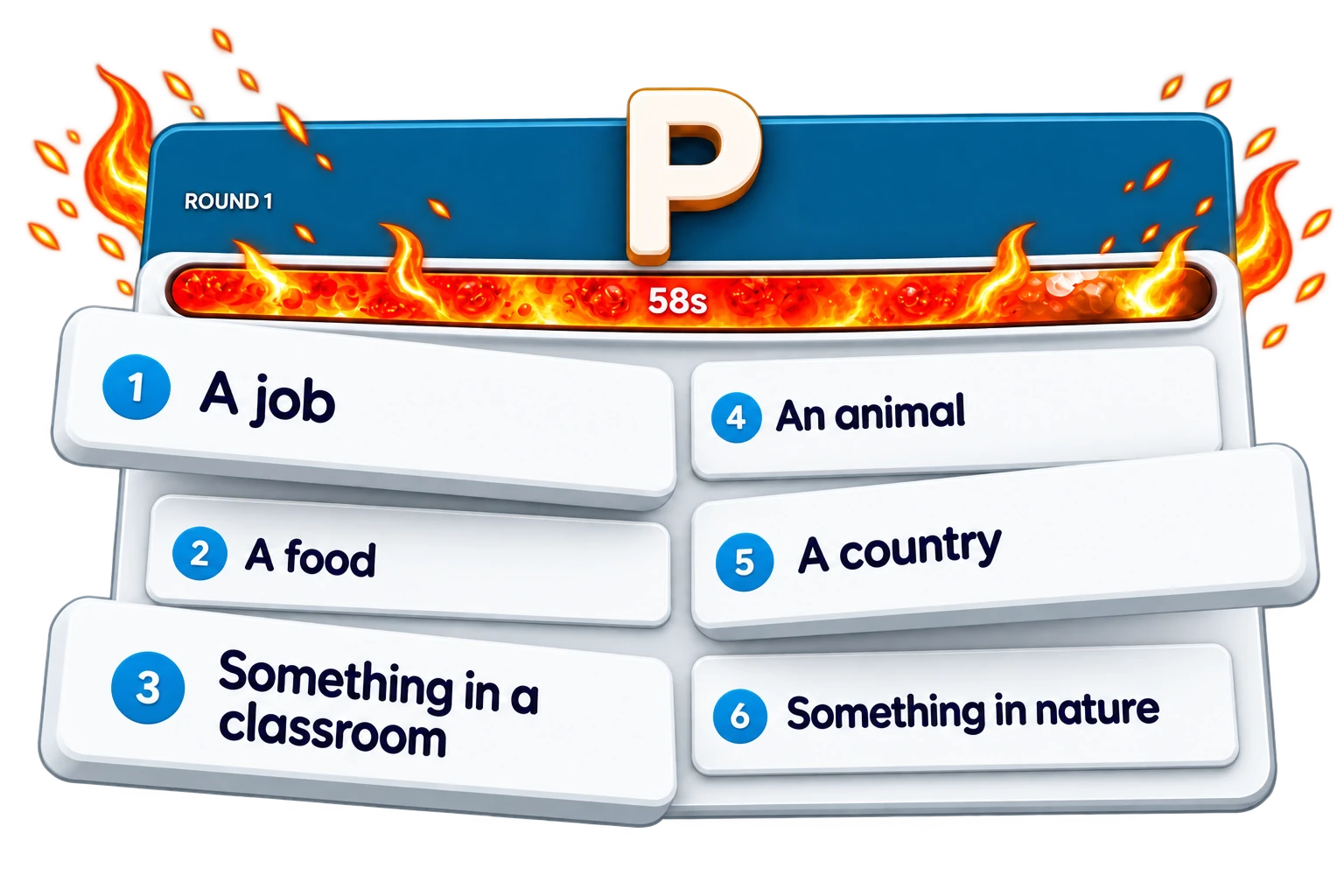
Let’s play Stop the Fire
Set up a round, compare the answers and see which team found something different.
You can keep the categories broad or make them fit your topic. Once the round starts, everyone works with the same letter and the fire timer begins.
Make it your own
- Pick categories that fit
- Use the built-in category bank, write your own list or ask AI to help. Keep it broad, or choose categories linked to the topic you are teaching.
- Set a comfortable pace
- Choose the number of categories and the round length. Start with fewer categories and more time, then turn up the challenge when everyone has the idea.
- Keep the discussion in your hands
- You decide whether an answer fits. Stop early to compare, or add time if the class needs another moment to finish their ideas.
Where will you take it?
- Wake up a lesson
- Start with familiar categories for a lively warm-up. It gives everyone something to contribute before you move into the main lesson.
- Make connections across a topic
- Try places from geography, living things from science or people and objects from history. Adapt the categories so more than one sensible answer is possible.
- Celebrate original thinking
- Invite students to explain an unusual answer. Shared answers build confidence; different answers give the class something new to talk about.
What will your class think of?
Choose a few categories, gather your teams and give their ideas a little room to run.